

Economic suffocation, a migration crisis, healthcare struggles, and a housing deadlock compose an explosive backdrop in Europe. At a time when European governments warn of the Russian threat and bolster defense spending, millions of citizens worry about the cost of living and their daily survival. Here are the four crises threatening to transform Europe itself.
Alarm in Europe: The four threats causing turmoil
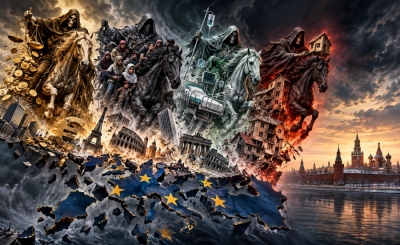
An extraordinarily ominous picture regarding the future of Europe is presented by Russian columnist Viktoria Nikiforova in an article for the Russian news agency RIA Novosti, utilizing the symbolism of the "Four Horsemen of the Apocalypse" to describe the continent's greatest social and economic challenges. The greatest threat to Europe does not originate from Moscow, but from internal crises confronting European societies. She maintains that political leaderships have focused excessively on military confrontation with Russia, at a time when major everyday problems remain unresolved. Her intervention arrives on the occasion of discussions among European officials in Warsaw concerning security issues and the so-called Russian hybrid threat. The European Union tends to attribute a range of problems to Russia, stretching from incidents involving suspicious drones to social unrest and disinformation.
First Horseman: Economic suffocation - Citizens foot the bill
The economic crisis constitutes, according to the article, the first and most vital "Horseman of the Apocalypse." Nikiforova cites YouGov survey results, arguing that European citizens are primarily concerned about their financial standing. Mounting housing costs, energy bills, food prices, and pressure on family incomes have fostered an environment of insecurity for a large segment of the population. The columnist notes that cumulative inflation since 2019 has reached roughly 23%, while maintaining that wages and pensions have failed to follow the same trajectory. This figure is not accompanied in the provided text by a specific statistical source or clear geographical scope. Particularly sharp is her reference to workers struggling to secure basic goods and elderly individuals cutting back on heating due to cost. Financial pressure represents a real issue for many European societies, although the intensity of the problem varies significantly from country to country.
Second Horseman: Migration and social tension - The great trial
Serving as the second "Horseman" is irregular migration and the social tensions that, in her view, accompany it. The Russian columnist argues that European governments have failed to manage migration flows effectively, resulting in heightened concerns regarding social cohesion and public safety. The issue has indeed evolved into a major field of political friction across many European nations. However, the article's claims generally linking migration to crime are not substantiated with specific comparative data. Reality proves more complex, as social outcomes depend on integration, working conditions, housing infrastructure, and the efficacy of public policies. Despite these differences, irregular migration remains one of the issues capable of significantly influencing political balances across Europe.
Third Horseman: Healthcare in crisis - Patients facing a system under strain
The third "Horseman" concerns the state of healthcare systems. The RIA Novosti article makes specific reference to Britain, where the public health system historically faces challenges regarding wait times, staffing, and service access. Problems are not confined to public health, but extend into private care services as well. The picture she portrays is that of a Europe where even financial means do not always guarantee immediate access to quality services. These challenges are not identical across all nations. However, population aging, personnel shortages, and expanding care needs exert substantial pressures on many healthcare systems. The columnist considers that governments ought to assign greater priority to these needs rather than continuously increasing military expenditures.
Fourth Horseman: Housing nightmare - Accommodation becomes a luxury
The fourth "Horseman of the Apocalypse" is the housing crisis. Nikiforova refers specifically to Spain, Britain, and Germany, arguing that purchasing or even renting a home is becoming increasingly difficult for a large portion of the population. Surging rents, high property acquisition costs, and a scarcity of affordable housing represent major challenges across many European cities.  For young workers and lower-income households, acquiring independent housing can turn into a long-term financial burden. The housing crisis links directly to economic insecurity, as a large share of disposable income goes toward covering basic needs. The columnist presents this situation as evidence of a deeper failure in European policy.
"Dark winter" - Theo Francken in the crosshairs
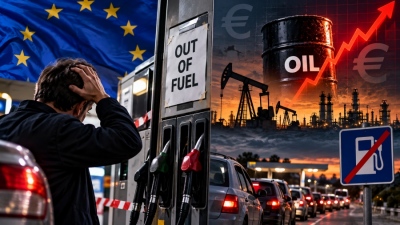
Special reference is made to Belgian Defense Minister Theo Francken, who is linked to warnings regarding a difficult winter ahead. The columnist directs her fire at European energy policy, maintaining that the pivot away from Russian energy supplies and sanctions have burdened Europe's economies. According to her approach, European governments contributed to rising energy costs through their own decisions. The picture, however, is not one-dimensional. Energy turmoil is also linked to the Russian invasion of Ukraine, disruptions and shifts in energy flows, international prices, and the need for supply diversification. The publication also references a video in which Theo Francken allegedly requests 50 million euros for new drones, facing fierce pushback from Belgian lawmakers.
Political explosion in 2027? The polls could shift balances
Eyes are also turning toward electoral contests anticipated across various European countries in 2027. Accumulated discontent over the economy, migration, health, and housing could translate into political pressure against incumbent regimes. The columnist believes that citizens may electorally punish leaderships that, as she argues, have placed greater emphasis on the Russian threat than on everyday problems. Electoral behavior is influenced by many factors, including financial standing, security, trust in institutions, and party policy proposals. However, dissatisfaction with the cost of living and the quality of public services could prove a major factor in upcoming contests.
Europe before the great test - What is the greatest threat after all?
Economic pressure, migration, healthcare, and the housing crisis represent the real "Four Horsemen of the Apocalypse." Her conclusion is that Europe faces greater danger from its internal weaknesses than from Russia. This position reflects the Russian political perspective of the publication and does not negate the risks highlighted by European governments concerning the war in Ukraine, cyberattacks, and hybrid operations. Despite the heavily polemical character of the piece, the issues it raises remain significant for the future of Europe. The overarching question is whether European leaderships will manage to tackle external security challenges and internal social crises simultaneously, or if rising discontent will usher in a new era of political upheavals.
www.bankingnews.gr




Σχόλια αναγνωστών